
Whoa, this is nerdy but useful. Solana moves fast, and my first impression was: chaotic. Seriously? Some days the mempool feels like Times Square on New Year’s Eve. My instinct said I could wing it, but that was before a $0.02 fee turned into a failed swap and a lesson learned.
Okay, so check this out—when I started poking around Solana transactions I felt oddly relieved. Hmm… the data is there, right in plain view. Initially I thought all explorers were about the same, but then I noticed tiny differences that change how I read a transaction. Actually, wait—let me rephrase that: some explorers surface the right signal faster, and others bury context under noise.
Here’s the thing. Solana’s TPS and parallel runtime make transactions look instant, though actually there are a few moving parts under the hood. On one hand it’s great, but on the other hand timing, reroutes, and failed preflight checks sneak up on you. My experience is practical: I watch signature confirmations, compute units, and inner instructions like a hawk, because ignoring them once cost me a token swap.
Wow! I still remember my first deep dive. I opened an explorer and my brain did a quick mapping—signature, block, slot, status, fee. Then I got curious about inner instructions. These tell you whether a token transfer was a CPI call, or if a program executed an inlined swap. That was an aha moment and it changed how I debug transactions.
Why transaction details matter more than you think
Real talk: you can’t just glance at a wallet balance and call it a day. Transactions reveal provenance, failure reasons, and sometimes the sketchy program that touched your funds. My gut says trust but verify, and the explorer gives you receipts. On a technical level, a transaction record includes signatures, recent blockhash, fee payer, and status meta.
Whoa! That list is short but powerful. Medium-level detail helps you triage quick problems. Longer traces help with audits or when something feels off for reasons that only surface after a few slots.
Initially I used explorers to confirm receipts, but then I started using them as diagnostic tools. For example, a “Transaction simulation” failure often tells you compute budget exceeded or an out-of-lamports error. On one hand it’s tedious, though actually being able to replay and simulate avoids repeat mistakes and saves time and funds.
Check this out—if you want a smooth, readable interface that highlights inner instructions and token transfers, try a dedicated explorer. The UI matters because readability reduces mistakes. I prefer one that shows program logs inline, but UI taste is a personal thing; I’m biased, but that feature saved me hours once.
Whoa! Quick tip: always check preflight simulation logs. They can show you the exact instruction causing the revert. Sometimes the error is trivial; sometimes it’s a second-order effect caused by a missing PDA or wrong account size. My instinct said it would be obvious, and wow, I was wrong—often it’s not obvious.
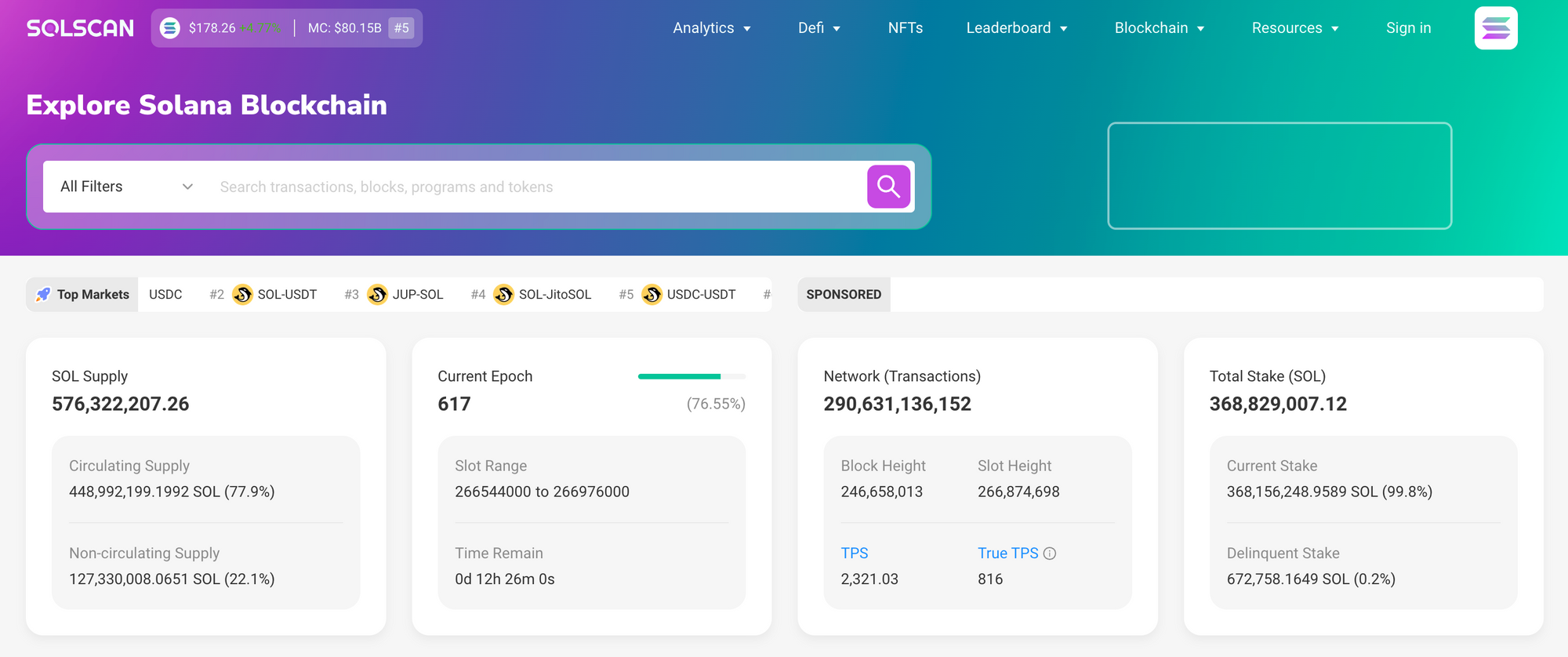
Now, about Solscan specifically—I’ve been using it as both a quick lookup and a deep dive tool. It surfaces token balances, NFTs, transaction details, and the chain explorer essentials in a compact way. If you want to try it, here’s a clean entry point: solscan explorer.
Seriously? Yes. That link is my shortcut to a familiar workflow. I keep it in my bookmarks and use it like a mechanic uses a torque wrench—precise, dependable, and I know its quirks. Some days it feels like a Swiss Army knife; other times it’s somethin’ more like a magnifying glass for a specific fault.
One useful pattern: start with the signature. Then read the status and recent block. Next, scan the instruction list and inner instructions. Finally, inspect logs for program-level errors. This sequence usually tells the whole story. Admittedly, sometimes you have to hop between tabs and wallets, which bugs me, but it’s part of the process.
Whoa! Small procedural thing: copy the transaction signature before you leave your wallet. Very very important. If a program rewrites accounts or if you suspect front-running, you’ll want that signature to trace every call across explorers and indexers.
Okay, here’s a practical walk-through of a typical failed swap I once debugged. I tried to swap a tiny amount of token A for token B. It failed. The explorer showed a simulated compute budget error. I adjusted the transaction to include a higher compute budget and resubmitted. The swap then succeeded, but the first failure cost gas and time.
Hmm… what surprised me was the inner instruction revealing an intermediary program that routed the swap. I had assumed a direct pair, though actually it used an aggregator to route through several liquidity pools. That intermediary added compute, and without increasing the budget, the transaction tripped the cap. Lesson learned.
On one hand these cascading calls are powerful for composability. On the other, they can be fragile if you don’t account for added compute or extra accounts. So I now preflight simulate every complex composable call. It takes a little time, but it avoids losing funds to failed retries or unexpected behavior.
Really? Yes—preflight simulation is underused, and that surprises me. A lot of users jump straight to on-chain submission, maybe trusting wallets or dApps, and hope the best. That approach worked sometimes, but when it fails, the explorer becomes your only honest witness.
I’m not 100% sure how all third-party relayers handle simulation, so I play it safe. If you care about provenance or compliance, the explorer stores an immutable trace you can reference later. That has value beyond immediate debugging: it’s audit evidence, it informs dispute resolution, and it reduces finger-pointing.
Whoa! Here’s a nuance many miss: transaction fees on Solana are low, but meta costs can be higher. Failed transactions still consume compute and lamports; repeated retries add up. Watching fee payer behavior and signatures helps you notice inefficient patterns or bots draining compute with repeated bumps.
One more practical trick: use the explorer to compare similar transactions. If you successfully did a swap yesterday and it failed today, compare the inner instructions, account keys, and log outputs. Often you’ll spot a changed authority, an expired allowance, or a different program version. That comparative habit saved me from a subtle bug last month.
Hmm… I sometimes ramble. Sorry. But real users like stories. And stories reveal patterns. Patterns are what let you move from being reactive to proactive when managing SOL and SPL tokens.
FAQ — Fast Answers
How do I find why a Solana transaction failed?
Start by pasting the transaction signature into the explorer, then check status and logs. Look for ‘Program log:’ output and inner instruction failures. If simulation fails, the logs often say compute budget exceeded or account not initialized. Compare a working transaction from the same dApp to spot differences.
Can I trust explorer transaction timestamps?
Timestamps are derived from block time; they’re approximate but reliable for ordering. Solana slots are the definitive ordering mechanism. For human-readable time use the explorer, but for ordering use slot numbers.
Why do inner instructions matter?
Inner instructions show what programs called other programs, who paid for compute, and where tokens actually moved. On-chain composability hides details unless you inspect inner instructions; that hidden layer is often where bugs and bridges live.
I’ll be honest—I’m biased toward tools that keep me informed without hand-holding. The explorer is that tool. It doesn’t promise to prevent all errors, though it equips you to understand them and reduce repeat mistakes.
Something felt off about the idea that explorers are only for devs. They’re for anyone who cares about clarity. If you’re trading, bridging, or minting NFTs, open the transaction details. Peek at inner instructions. Get curious.
Whoa! One last nit: don’t trust everything you read in a UI at face value. Cross-check with raw transaction data and multiple explorers if needed. Somethin’ could be cached, or a UI may interpret logs differently. A little skepticism pays dividends.